

Modern haploidentical stem cell transplantation has emerged as the highest-value curative treatment for adults with sickle cell disease, according to a new analysis.
Safer, less toxic stem cell transplantation approaches have overtaken gene therapy as the highest-value curative treatment for adults with sickle cell disease, according to a new analysis that highlights the rapid evolution of transplant outcomes in recent years.
The study, published in Blood, found that non-myeloablative haploidentical allogeneic stem cell transplantation (NMAC-HID allo-HSCT) provided the greatest overall value compared with gene therapy and standard care, while also expanding access to curative treatment through the use of half-matched donors.
Researchers from Yale School of Medicine developed a decision-analytic model to compare lifetime clinical outcomes and costs for adults with sickle cell disease receiving standard care, NMAC-HID allo-HSCT or gene therapy.
The analysis incorporated treatment-related complications, including graft-versus-host disease (GVHD), treatment failure and long-term survival.
Lead author Dr George Goshua, assistant professor of medicine at Yale School of Medicine and Yale Cancer Centre, said the findings reflected significant improvements in transplantation techniques.
“Gene therapy is an incredible innovation, but it comes with an astronomical cost,” he said.
“Recent prospective studies suggest that stem cell transplantation is now safer and more efficacious than before for people living with sickle cell disease, but data on its cost-effectiveness, especially in the era of gene therapy, have been limited.”
Sickle cell disease is one of the most common inherited blood disorders and affects almost eight million people worldwide.
It is more prevalent in people with ancestral origins in regions where malaria is common, including sub-Saharan Africa, the Indian subcontinent, the Arabian peninsula, and parts of the Mediterranean.
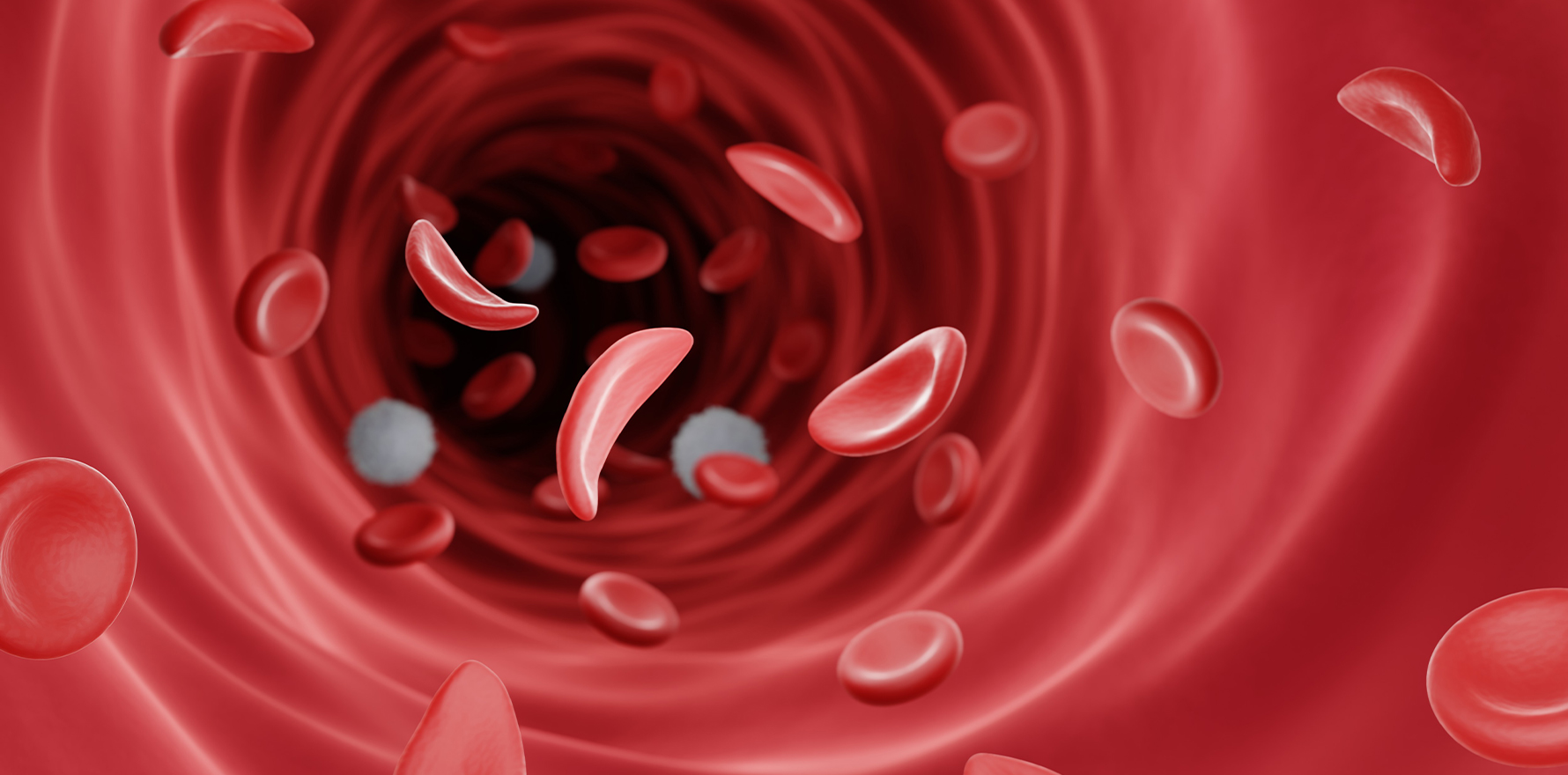
The disorder is characterised by abnormally shaped blood cells that can become lodged in the blood vessels, blocking blood flow and leading to organ damage, infection, and episodes of severe pain.
While standard management with hydroxyurea, transfusions and supportive care can reduce complications, curative therapies have increasingly become a realistic option for selected patients.
Gene therapy and stem cell transplantation both aim to replace defective blood-forming stem cells with cells capable of producing normal red blood cells.
The transplant approach evaluated in the study uses reduced-intensity conditioning, requiring less chemotherapy and radiation than traditional myeloablative transplantation.
It also relies on haploidentical donors, meaning only a half-match is needed, substantially increasing donor availability for patients who may struggle to find fully matched donors.
Related



Although haploidentical transplantation remains associated with the risk of graft-versus-host disease (GVHD), where the immune system attacks donor cells, rates are considerably lower than those seen with earlier transplant strategies.
In contrast, gene therapy requires intensive conditioning before reinfusion of the patient’s own genetically modified stem cells. It was approved by the US Food and Drug Administration in 2023 for patients with sickle cell disease aged 12 years and older.
In the modelled base-case analysis, gene therapy produced the highest projected quality-adjusted survival, with patients accruing 22.1 quality-adjusted life-years (QALYs), compared with 20.1 QALYs for NMAC-HID allo-HSCT and 14.3 QALYs for standard care.
However, transplantation generated the greatest net monetary benefit, emerging as the preferred strategy across all accepted willingness-to-pay thresholds.
Compared with standard care, NMAC-HID allo-HSCT produced an incremental net monetary benefit of US$657,000 (about AUD$929,000).
When compared directly with gene therapy, the incremental net monetary benefit increased to US$1.4 million (about AUD$1.98 million).
The researchers based their transplantation model on outcomes reported in the phase 2 Blood and Marrow Transplant Clinical Trials Network 1507 study and the Vanderbilt Global Haploidentical BMT Learning Collaborative.
Using these data, they estimated that gene therapy would need to be priced between US$627,000 (about AUD$887,000) and US$740,000 (about AUD$1.05 million) to achieve value comparable to transplantation, substantially lower than its current list price and below previous estimates of approximately US$1.3 million (about AUD$1.81 million).
Dr Goshua said the findings were relevant not only to clinicians and patients but also to policymakers weighing investment in curative therapies.
“From a patient perspective, there are multiple trade-offs across sickle cell treatment options, including differences in eligibility, timing, and a patient’s individual values and preferences,” said Dr Goshua.
“From a policy perspective, understanding the cost-effectiveness of all these available treatments can equip governments to make informed, strategic decisions about how to invest in and support the health of their populations living with sickle cell disease.
“That said, it is important for individuals living with sickle cell disease to have access to as many treatments as possible; gene therapy may be the best option for many patients, and these data should not be interpreted as reason to deny them coverage. Treating physicians must continue to discuss all options with patients in the context of shared patient-physician decision making.”
The researchers acknowledged several limitations, including the lack of long-term efficacy data for both contemporary haploidentical transplantation and gene therapy, the absence of patient-level comparative data across studies and uncertainty around confidential discounts that may reduce the real-world cost of gene therapies.
Nevertheless, they concluded that contemporary haploidentical transplantation currently offered the strongest combination of efficacy, accessibility and value among available curative options for adults with sickle cell disease.
“The landscape for SCD treatments will continue to evolve with the adoption of NMAC-HID allo-HSCT and gene therapy,” the researchers concluded.
“In the US, the Centers for Medicare and Medicaid Services is actively implementing the Cell and Gene Therapy (CGT) Access Model, which aims to increase availability for cell and gene therapies and decrease immediate costs through outcomes-based payment contracts.
“Globally, similar efforts are underway to both develop and implement cost-effective curative intent treatments for SCD. Within these frameworks, we hope that our study helps inform transparent, value-based negotiations for gene therapy pricing, with the goal of increasing the availability of treatment options for achieving livelong remission in patients living with SCD.”
