

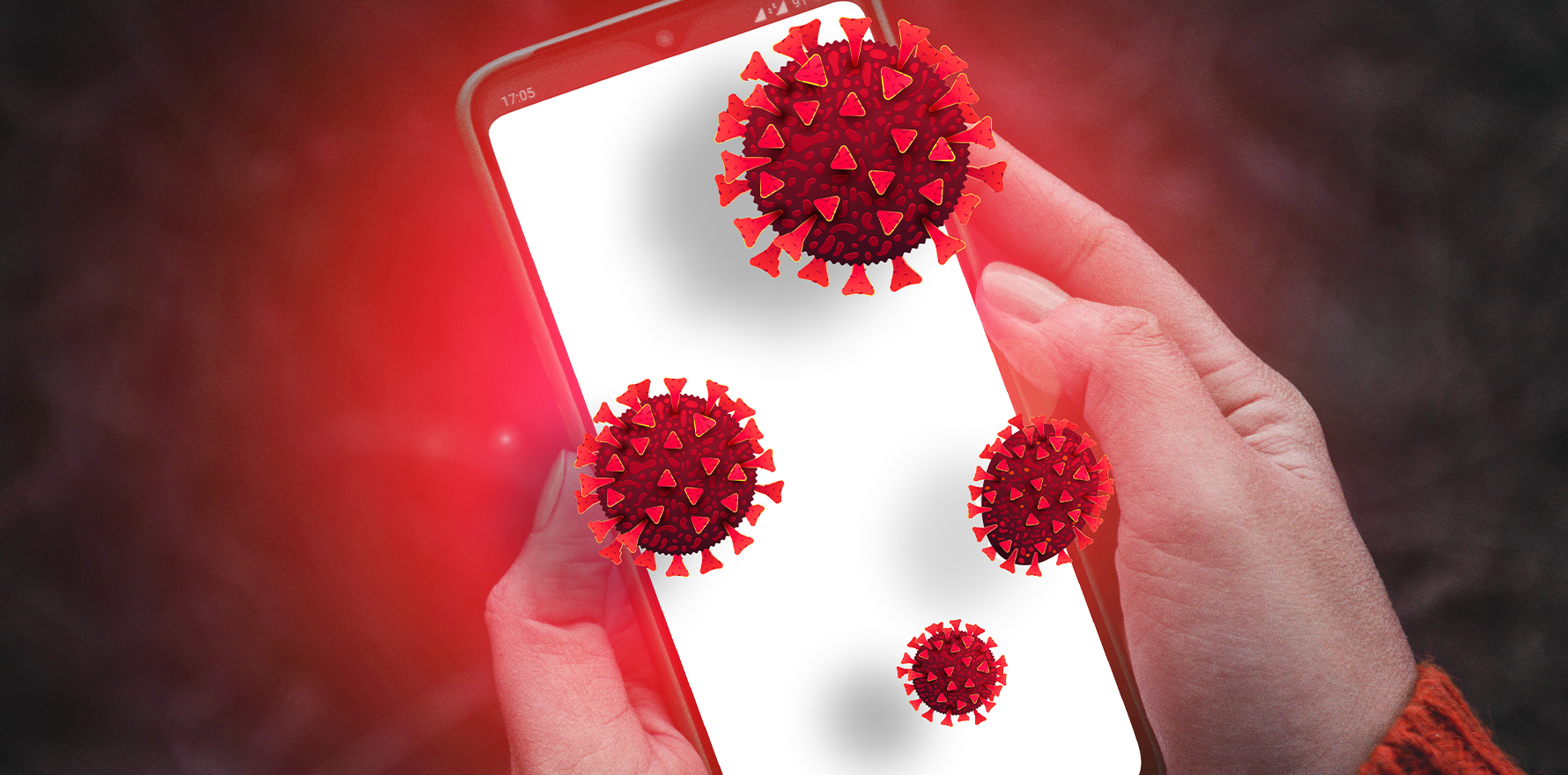
Killer bacteria and antibiotic resistance genes have been found on healthcare workers' mobile devices, raising fears they are fuelling hospital infections.
Healthcare workers’ mobile phones could be harbouring dangerous bacteria linked to the world’s deadliest infections, with researchers warning the everyday devices could be accelerating the spread of antibiotic resistance inside hospitals.
An international study of 95 mobile phones used by healthcare workers in Australia (56) and the United Arab Emirates (39) found every device was contaminated with bacteria, while three in four carried more than one of the world’s highest-mortality pathogens.
The study was led by investigators at The Wesley Research Institute, The University of Queensland and the Critical Care Research Group (CCRG). They aimed to find out just how big a problem this was and whether exposure to special ultraviolet light (UV-C) could make phones safer for use in hospitals.
The researchers also identified hundreds of antimicrobial resistance genes and virulence factors that can make infections harder to treat and potentially more dangerous.
Their findings were published this month in the journal Microbiology Open.
The metagenomic analysis found phones contained an average of 3.62 of the 10 bacterial species responsible for the highest number of infection-related deaths globally, along with an average of 2.49 ESKAPE pathogens – a group of highly drug-resistant bacteria responsible for many hospital-acquired infections.
Researchers detected 262 unique antimicrobial resistance genes, 667 virulence factor genes and more than 300 bacteriophages across the devices, highlighting mobile phones as potential reservoirs where harmful bacteria and resistance genes can accumulate.
“On average, mobile phones were identified to be contaminated with 3.62 of the top 10 highest mortality-causing bacteria and 2.49 ESKAPE pathogens,” the researchers wrote.
“A total of 262 unique ARGs, 448 unique VFGs, and 314 bacteriophages were identified.
“Mobile phones within healthcare settings harbor pathogens alongside genes associated with increased virulence and antimicrobial resistance.
“Additionally, mobile phones, known to be infrequently sanitised, may increase antimicrobial resistance by providing a contaminated platform which facilitates continued horizontal genetic transfer.”
Every year, more than 200,000 Australians pick up an infection while in hospital. Many of these bugs are tough, antibiotic-resistant types that make people sicker for longer and, sadly, claim thousands of lives.
The study found Pseudomonas aeruginosa was present on 82% of phones, while Staphylococcus aureus contaminated 72%. Other clinically significant organisms, including Acinetobacter baumannii, Escherichia coli and Klebsiella pneumoniae, were also identified.
Researchers warned the findings suggested mobile phones were more than passive carriers of bacteria. Instead, they may provide an environment where antimicrobial resistance genes can be exchanged between microbes through horizontal gene transfer, increasing the risk of more resilient pathogens emerging.
The study also identified genes associated with resistance to multiple antibiotic classes, including penicillins, cephalosporins, carbapenems and fluoroquinolones, alongside virulence genes linked to toxin production, immune evasion and biofilm formation.
Lead author Dr Hugh Wright said mobile phones had become an essential clinical tool but remained one of the least sanitised items in healthcare settings.
“Early findings show just how easily phones can become reservoirs for harmful bacteria,” he said.
“Mobile phones are essential tools, but we need to treat them the same way we treat our hands. A 10-second UV-C clean could slot straight into existing hand-washing routines and give patients extra protection.”
The researchers said current cleaning practices were inconsistent and may not be sufficient to eliminate bacterial DNA or biofilms that allow resistant organisms to persist.
They said hospitals should incorporate routine mobile phone disinfection into broader infection prevention and antimicrobial stewardship programs, alongside existing hand hygiene measures.
While the study detected genetic material rather than proving live bacteria were causing infections, the authors said the findings strengthened concerns that personal devices may contribute to hospital-acquired infections and the global rise of antimicrobial resistance.
The researchers called for greater investment in practical phone sanitisation strategies, including validated UV-C disinfection systems, behavioural interventions and stronger infection control policies to reduce contamination on one of healthcare’s most frequently handled devices.
“While our environmental metagenomic design cannot prove event-level transfer, the convergent genomic architecture and selective milieu provide evidence that small objects such as mobile phones in healthcare settings are not passive carriers but act as microhabitats for HGT contributing to the global development of antimicrobial resistance,” the researchers concluded.
“As a result, sanitization strategies to disinfect mobile phones should be implemented as part of a broader antimicrobial stewardship program with the intention of reducing HAIs and reducing their associated human and economic burden.”
Read the full paper here.
